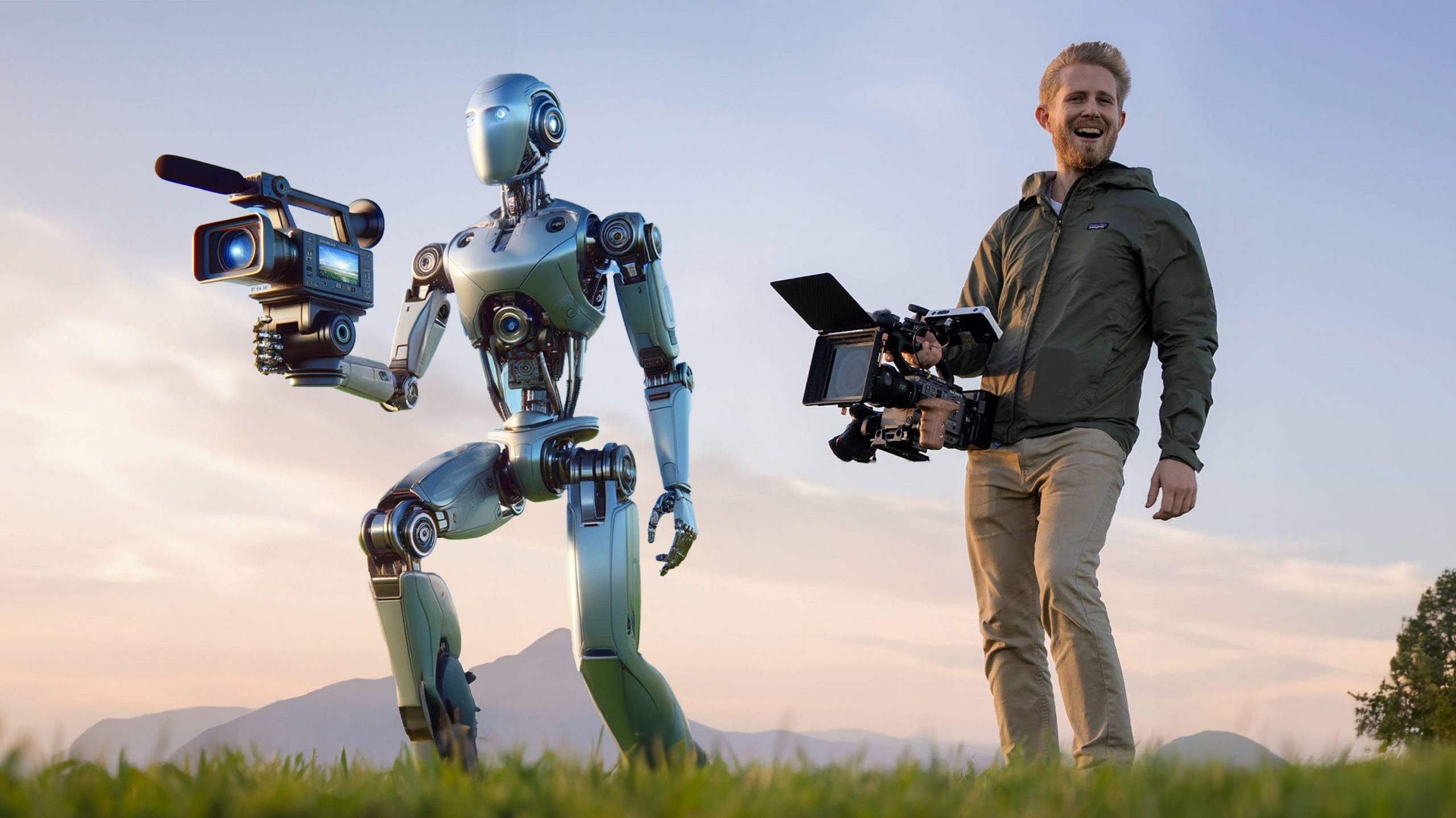
AI, the spectre haunting the filmmaking industry. In the world of big-budget cinema, generative AI is currently viewed as a threat to many people’s valuable work. Is there any way for it to be used more positively? Let’s look.
AI Agreements
Since the 2023 Hollywood strikes, the creative world has seen attempts to place rules and regulations on the use of AI in films.
Beyond the settlements negotiated by the WGA and SAG-AFTRA, in 2024, German actors’ unions and producers signed another agreement looking at film and TV’s use of AI. It focused on ensuring that actors had control over their image. The agreement stated that permission must be obtained for AI use relating to an actor, regardless of how it was created. It must also be used for a specific purpose. Protecting an actor’s image from being continually exploited by AI companies. And compensation is required for the potential paid shooting days that actors lose. Similarly, a Munich court recently ruled against the AI program ChatGPT for violating copyright. Indicating there are still ways for creatives to control their work in the age of AI corner-cutting.
Netflix also released its own guidelines relating to AI’s use in productions. They say AI can be used to help generate ideas through things like moodboards. Using it to create unimportant background materials is also permitted, subject to review. However, using AI to create key elements, e.g. main characters (human or animated), crucial visuals, replicating actors, or training data on unowned art would see the company take action to avoid infringement on legal rights, copyright, union roles, etc.
That said, recent stories like the Oscar nominations of films using AI art and tools, the unveiling of AI “talent”, and the controversy surrounding Netflix’s use of AI in various projects mean the battle for regulation is going to be fiercely raging for a while.
AI In Indie Films
Can AI be used in a more constructive way? As stated in previous articles, AI could make a positive difference in low-budget filmmaking.
Some focus on how the use of generative AI can enable smaller productions to create bigger-scale visuals. But this argument follows the same logic, causing concerns among artists in the first place. It says, “You no longer need to bother paying artists to create an impressive visual world. Just use AI prompts to scrape the works of others and call it yours.” Some AI models, like those created by animation group Asteria, are apparently being trained in collaboration with artists using original and licensed work. Although this still raises the question of whether it devalues industry workers. Does it mean that a worker whose job was to implement something to do with what Asteria generates will lose work?
Where its use can be helpful is in pre-production, particularly pre-visualisation. Ayomide Saibu noted how AI can help productions “anticipate challenges and refine their creative vision before stepping onto the set.” For example, generative tools can help create storyboards, visualise and prepare for potential safety risks and create rough concept videos and visuals to convince investors. Helping facilitate the project’s creativity rather than being a replacement for the final product.
Another way it has promise is in how it can mitigate dangerous circumstances. In the German agreement mentioned previously, a carve-out has been made for replicating actors in dangerous scenes. Such as during stunts. Provided enough consideration is given to stunt performers, perhaps by only employing AI for replacing character faces or only using it to simulate the most dangerous stunts, AI could limit the amount of danger faced in stunt scenes, particularly on smaller-budget productions.
Film and AI in 2025
Some say the AI boom is simply the next development in filmmaking, like sound, colour and CGI. Like those other developments, though, AI is a tool. What matters is how it’s used.
In the right hands, AI can help streamline pre-production and take the danger out of filmmaking. All while adding to the ever-growing art of CGI. What it should not do is replace key creative talent and rip off others in the sole effort to save money. Filmmaking, after all, is a team effort and an art form. Not a tech demo.