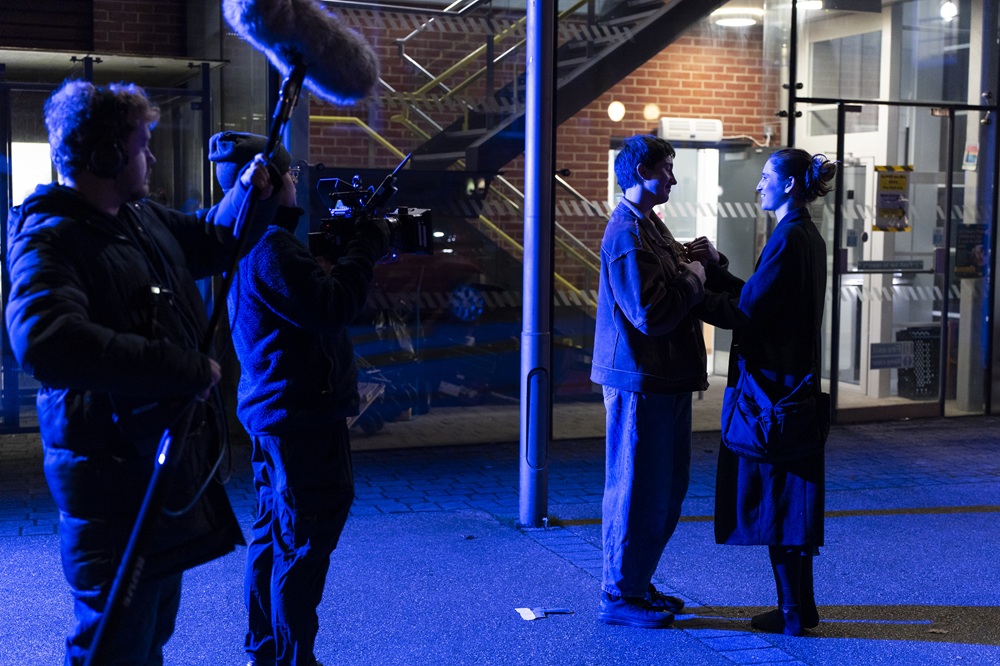
The Collective Acting Studio is taking a bold step from classroom training to feature filmmaking with Lines That Cross, a new feature-length drama developed by its BA students and set to premiere across international festivals in autumn 2026.
The project marks a major expansion for the London-based acting studio’s film department, which has already built momentum through a series of award-winning short films. But Lines That Cross is being positioned as something more ambitious than a student showcase. For Collective, it is part of a wider attempt to rethink how emerging screen talent is trained, supported and seen.
Rather than separating acting training from the realities of production, the studio has placed filmmaking at the centre of its curriculum. Students are not only performing in front of the camera, but also engaging with writing, directing and producing, learning how screen work is built from the inside out.
“Our aim has always been to collapse the divide between training and professional production,” said Head of Film and Television Anthony Vander. “Lines That Cross isn’t just a student film; it’s a full-scale feature made by emerging talent working to industry standards, both creatively and technically.”
The feature follows the success of The Interview, a Collective short film directed by Bethany Taylor-Goh that won 12 international festival awards and helped raise the studio’s profile within the independent training landscape.
Founded by Paul Harvard, The Collective Acting Studio now produces up to six short films alongside pilot projects and feature-length work, creating what it describes as an “unbroken pipeline” from training to exhibition. The approach reflects a changing screen industry where access to production tools has widened, but meaningful routes to visibility remain difficult for new talent to secure.
That tension sits at the heart of the studio’s model. Traditional drama schools have often focused on performance training before sending graduates out into a competitive and tightly controlled industry. Instead, Collective is exploring a hybrid approach in which students build practical production experience while creating work intended for real audiences.
The timing feels significant. The UK screen sector continues to face serious questions around access, affordability and sustainable entry routes for emerging creatives. As tuition costs rise and professional opportunities become harder to reach, models that allow students to generate their own work could become increasingly important.
Whether Lines That Cross breaks through on the festival circuit remains to be seen. But as a full-scale feature made from within a training environment, it signals a compelling shift: emerging talent no longer waiting for permission to enter the industry, but building the work, networks and visibility themselves.