
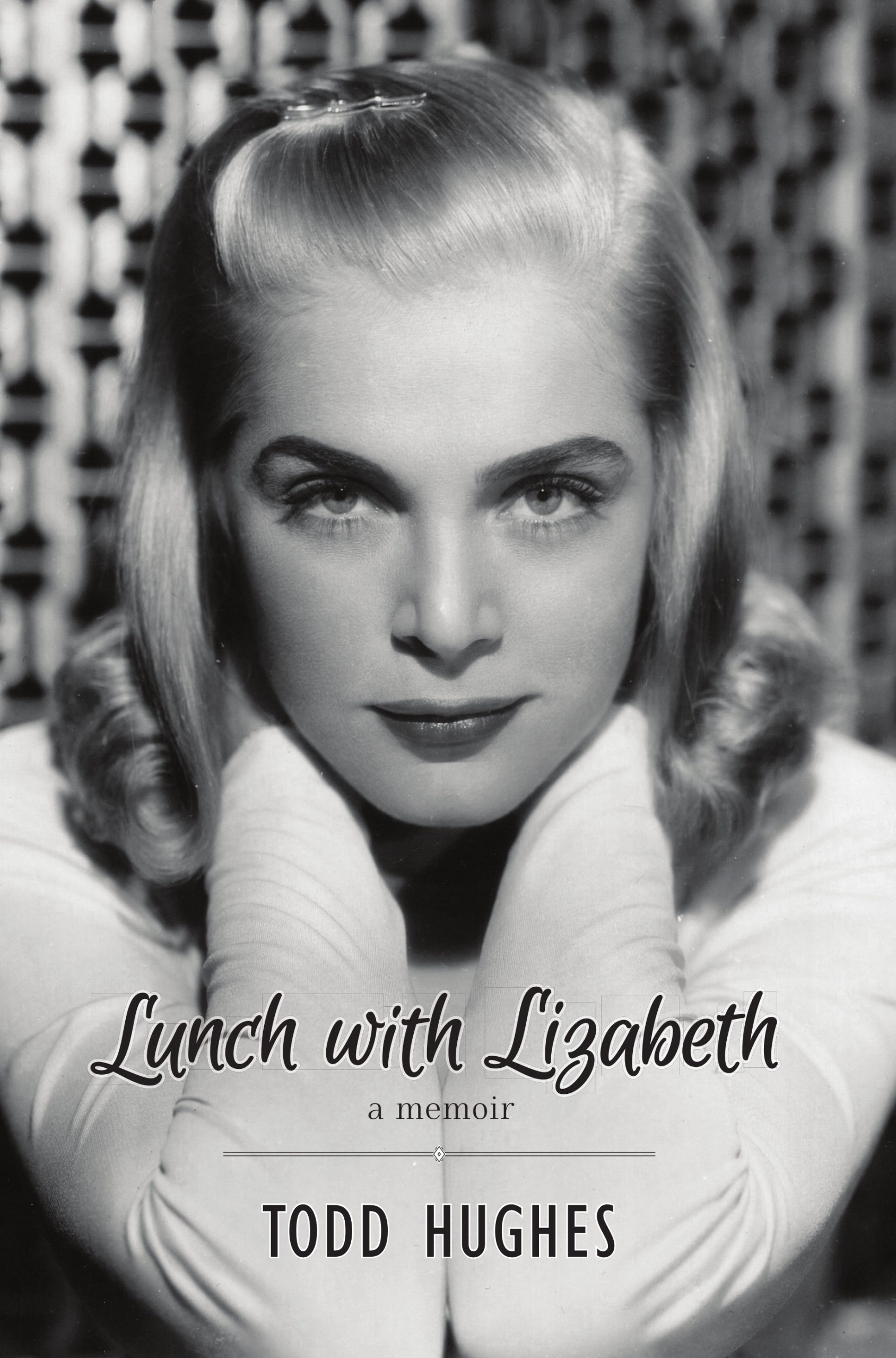
Lizabeth Scott is a noir film royalty that some cinephiles haven’t heard of. Still, she is a leading player of the genre, having her heyday in the 1940s and 1950s, when she acted alongside legends such as Barbara Stanwyck, Kirk Douglas, Burt Lancaster, and Charlton Heston.
To recover the shine of this forgotten star from Golden Age Hollywood, gay filmmaker and screenwriter Todd Hughes released the book Lunch with Lizabeth in 2022 through publisher Pelekinesis.
Lizabeth Scott had a trailblazing career, performing every noir archetype and being the first independent-contracted star, rupturing the studio system’s monopoly that had control over their stars.
Lunch with Lizabeth is an endearing story of a 20-year-long friendship between a star who outlived her fame and the filmmaker who started as her fan but evolved into a confidante who would share meals and spend hours on telephone conversations, even touching on complex subjects such as sexuality, politics, and society.
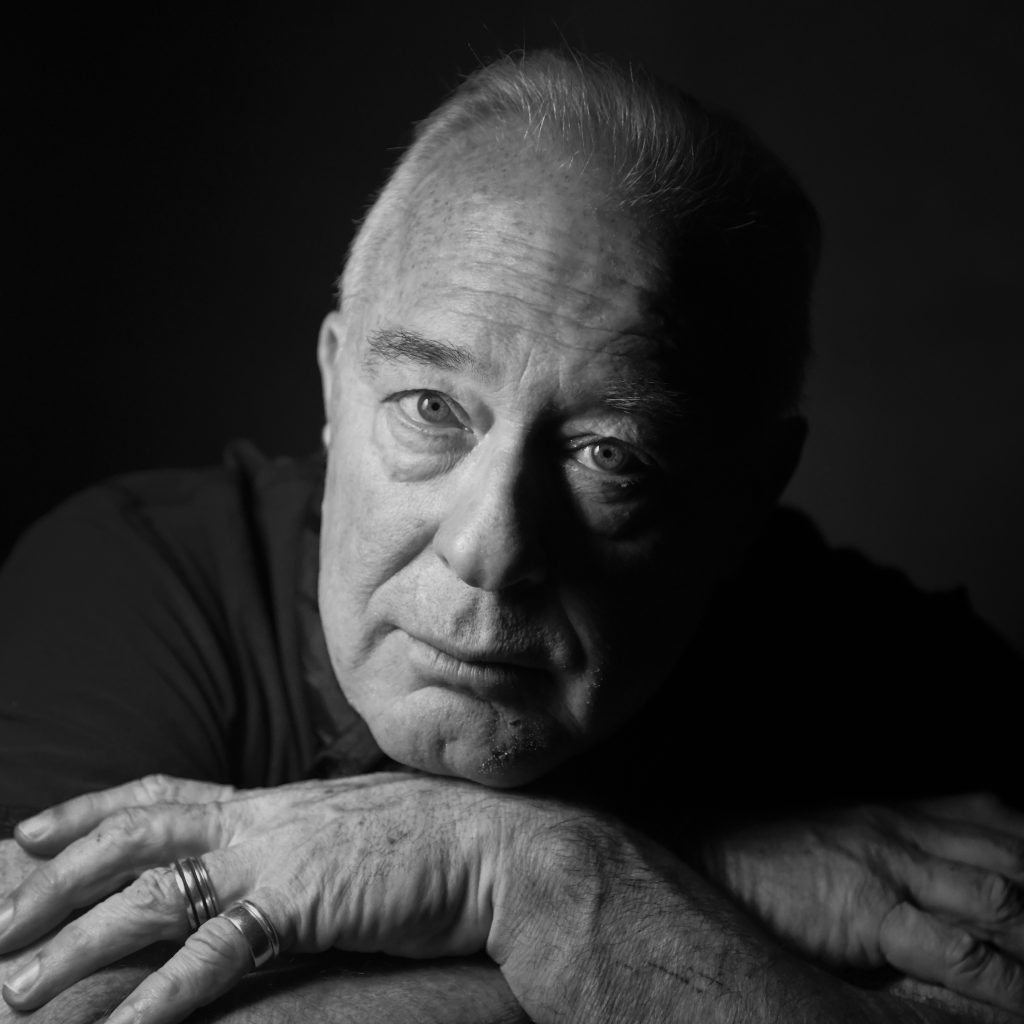
As a filmmaker, Hughes is known for directing documentaries on French fashion designer Pierre Cardin, and Cher and her mother. Hughes gave a video interview with the Big Picture Film Club in November 2025 to talk about Scott’s career, her status within Hollywood’s star system, and their friendship, in which Hughes found the human being behind the star to whom he could dedicate unconditional love.
In the ephemeral current Hollywood landscape, the work Hughes did to salvage the story of Scott presents itself not only as a portrait of a friendship, but also as a service to cinema history.
Gabriel Leão (GL): Why did you decide to write a book on your decades-long friendship with Lizabeth Scott instead of writing a standard biography?
Todd Hughes (TD): When she was alive, after finding her address, I wrote a letter, which is in the book: “Can we meet to collaborate and write a biography?”, and she said: “I don’t think I’m worthy of that kind of adulation, why would anyone want to read a biography about me?”, and I replied: “Because you are this great star and historically significant, and you worked with all these people…”, to which Lizabeth said: “No, no, no!”
But over the years we became friends, I hadn’t started my documentarist career yet; in fact, I was making a narrative film that I asked her to be in, but she hated the script… (laughs) and told me so. Still, we didn’t do the biography, but towards the end of her life, she would say, “Now maybe…,” and I said, “Now that I make documentaries, let’s sit down and do these interviews and get them on tape.” She was 90 (years old)!
But we never got around to it. Nevertheless, even before I met her, I dreamed about writing a book on her and her career; thus, I proposed a coffee table book which would just be pictures, because there are so many beautiful pictures of her; it would be ‘The Films of Lizabeth Scott.’
She didn’t like that idea because she thought her story wasn’t that interesting. When she died, I said: “I gotta do something to commemorate her.” Also, there is nothing out there, and if I hadn’t done it when I did, we would be here years later from when she died in 2012, with nothing on her. Then it came to me to write about what I know, which was my obsession with her, then meeting her, and our friendship. It was an interesting story, and it gives an insight into her. Throughout the book, she indeed shared stories with me about Hollywood that I included.
As she got older, she got more spiritual, and then she was a Republican, and I’m a Democrat, and we started clashing over Barack Obama… (laughs).
I think that when she died, she was a much more open-minded person, and it was good for me too, because you learn from someone with a different point of view, then was like her grandson, and we always said: “I love you” on the phone, and she was like: “You could call more often,” like a typical mother.
The Hollywood stuff started falling off. By that point we’ve known each other for twenty years, so we could talk about things we’ve done together or “Remember him?… ”
GL: This wouldn’t work as a standard biography?
TH: No, because it was about us. The most negative reviews that I get are when people think it is a (straight) biography of Lizabeth. When it clearly says: “It is about a friendship with Lizabeth Scott.”
I think it is nice that there is something to tell about who she was, where she came from, the movies she made, the experiences she had, and what she was like as a person. She was extraordinary.
GL: What can you tell our readers about your first personal encounter with Lizabeth Scott?
TH: I didn’t put this in the book because it is too much. When I got to Hollywood in 1986, I was obsessed because I read that she lived on Hollywood Boulevard. So, I would go up there, trying to find a mailbox. I knew she drove a Jaguar.
I worked in West Hollywood. One day, I was coming from East Hollywood, a neighbourhood called Los Feliz, people were running a marathon, all the traffic was jammed; I was two hours late for work. As I was stuck in traffic, I saw this green Jaguar coming towards me. Then I saw blonde hair, she pulled right next to me, I looked over, and I went (makes surprise facial expression), and she went (repeats the expression)… (laughs).
“My God, that was Lizabeth Scott! I’ve seen her live!”
Years later, I found her address, wrote her a letter, and she wrote me back. Later, she invited me to lunch on Valentine’s Day in 1996 at Musso & Frank (Grill) restaurant, which is a famous Hollywood restaurant.
That was the first day I met her. The restaurant was empty, and I was all dressed up in a suit. They put me way in the back, and she wanted to meet at 12h45.
She came locked in with the maître; she was so little, I saw that hair, and she was like: “Oh, don’t you have a better table? Why put this over here? Put this right up front.”
It was just a quick “hello, hello.” She turned around, and from behind, she looked like she was 20 years old. Lizabeth was wearing these tight jeans and a leather jacket, looking very hip, very modern, and in beautiful shape. When we finally sat face to face, I thought, “Wow, you are an older woman.” But as soon as we started talking, I just looked into her eyes, and she looked into mine, and we just connected.
The first thing she said was: “Do you believe in fate?” I said, “Yes,” to which she said, “So do I, and we were destined to meet.” And from that day forward, we were friends.
It is a very odd thing because something you are obsessed about, dreamt about, read about, and seen in movies, and there she is, right across from me, and you look into her eyes, and she is human, right!! And I think it just equalises the playing field; it equalises the world. We are all human; we are all just people, and that is a great thing for me to discover because I work with many famous people, and you just have to say, “They are people.” You may admire them, you may think they are wonderful, you may tell them that, but at the end of the day, we are all the same.
That was nice, and it was so pleasant that she was so nice, that she was funny, that we both had a sense of humour, and we liked to laugh. Right out of the bat, we were hitting it off, and I asked her: “What was it like to work with Elvis Presley?!” And she replied: “He was the most beautiful man that I have ever seen!”, “Robert Mitchum?” “He brought his guitar to my dressing room and sang to me…” I was just amazed.
GL: You are more known as a filmmaker. How was this transition to writing?
TH: I’ve always been a writer. In college, I studied Comparative Literature. When I got to Hollywood and met David (Ebersole), my husband, we started writing scripts for Hollywood, so I started out as a writer. I love literature; I have always wanted to write a novel because I’ve had a crazy life and have so many stories in my head.
When the pandemic came, I just met a lady when Martin Scorsese was doing a documentary about David Johansen (Buster Poindexter), the lead singer of the New York Dolls. He was an actor, a friend married him, and we became friends with him as well.
Scorsese was shooting this documentary (Personality Crisis: One Night Only, 2022), his people asked us to be extras in the audience; they wanted family and friends. We sat at the table with a woman who is friends with Scorsese, and I said, “Have you ever heard of Lizabeth Scott?”, she said, “Oh, I love Lizabeth Scott!”
I told her that I always wanted to do this book; she said, “I’m going to call you every week and ask how that book is going because you’ve got to do it!” That was January of 2020. So, the next month, we were in the pandemic lockdown, and I got on my computer and wrote the first version. And started three times.
The first time, I wrote all this stuff, and I realised it was all about me, then I did it again. I didn’t like it because it was too serious, but the third time it clicked. I had it so clearly in my head. I remembered how much fun we had, so I made it fun.
I’ve been researching her for years; I tried to include everything I knew about her that I’d never seen published. It was a great experience. Then I submitted it to Pelekinesis, and Mark Givens was my editor. He did a great job, really focusing on the book. We designed it, thinking about those pictures, which I don’t think anybody had ever seen at all I thought it was beautiful; I was thrilled, and Mark let me release it on September 28th, 2022, which was her 100th birthday.
GL: For a long time, Scott was unfavourably compared to Lauren Bacall and Tallulah Bankhead, and was treated harshly by critics in what seemed more like personal attacks. However, in recent years, she has been receiving more favorable evaluations of her oeuvre and Hollywood presence. How do you explain this transition in her status?
TH: I think the real thing that distinguishes Lizabeth from people like Bacall and Bankhead is that she didn’t have a film that endured. Bacall starred in all of Humphrey Bogart’s films; Bankhead was in Alfred Hitchcock’s ‘Lifeboat’ (1944).
Lizabeth, even though she performed with Bogart and Barbara Stanwyck, none of those films endured. In 1945, she was on the cover of Life Magazine; she was everywhere, everyone knew who she was, she had three or four big hits at the box office, but she outlived her own fame as people forgot about her over time, and she retired from acting. She withdrew from the spotlight while Bacall and Bankhead were “promosexuals” and stayed out there until the end, doing interviews, TV commercials, and whatnot.
But I think now that there is a whole new generation discovering film noir and classic films, and Lizabeth speaks for herself, an incredibly beautiful and unique voice, and her style is very unlike Bacall or Bankhead.
The unfortunate thing is that, for some reason, she has a reputation… The magazine Confidential exposed her as a lesbian. That was not that big of a deal at that time, but as time goes on, she is in every book on queer cinema now. They say: “Lesbian actress Lizabeth Scott!”
But it was just rumors, and people reprint lies, because she was not a lesbian. Lizabeth was white, heterosexual, and Republican, but she was not homophobic, racist, or sexist, Lizabeth admired other women. But that world (she was in) was very privileged, and she was also the mistress of Hal Wallis, a powerful producer.
Men like Lancaster and Douglas saw her as just the producer’s girlfriend who rode his coattails. So, she had that problem with other people in Hollywood; she was on the inside, she was a star in her very first movie. Nevertheless, she had already been on Broadway for 10 years.
A lot of things worked against her, but I think now that people discovered her first before finding out that she was the mistress of the studio guy, that she was (erroneously) believed to be a lesbian, and so on. They just go: “Who was that incredible actress?!” and judge Lizabeth on her own value.
GL: Do you believe that the current cinema community is seeing her with better eyes than when she was alive, considering how the critics treated her?
TH: Absolutely!
The reason that she is called “The Queen of Film Noir” is that most of the films she made in the 1940s and 1950s they didn’t call it “film noir”; they were just crime dramas, melodramas. However, now that we look back and see that after World War II, there were all these movies about people in America disillusioned with the system, and Lizabeth is the noir queen because she plays every single kind of noir archetype.
Lizabeth plays the good girl, plays the bad girl, the good girl gone bad, and the bad girl gone good. In her career, she did one comedy with Dean Martin and Jerry Lewis (Scared Stiff, 1953), and she used to say that was her favourite film because it was so much fun. And she did that movie with Elvis Presley, ‘Loving You.’
But in the world of film noir, in which she played every kind of heroine that was, she is being recognised now and will always be recognised going forward as one of the important figures of film noir.
GL: What is Lizabeth Scott’s legacy for the noir genre and for cinema as a whole?
TH: I think, historically, she is very significant because when she became a star, there was something called “the studio system,” such as Paramount and MGM. They signed people to their contracts, so each studio had its its “stable of stars.”
Wallis produced ‘Casablanca’ (1942), which won Best Picture, and he worked at Warner Bros. When ‘Casablanca’ won Best Picture, the Warner Bros said, “You sit down,” and he said, “I’m the producer, I should get the Academy Award,” and they said, “No, Warner Brothers won for that film, you work for Warner Brothers.”
The next day, he said, “I quit, I’m forming my own independent company,” and the first person he signed was Lizabeth Scott. Then he signed Burt Lancaster, Kirk Douglas, and Charlton Heston. Wallis was someone who knew talent.
Lizabeth was the first independent contracted star in the studio system, and that is when all of Hollywood began to change. Thus, I think that for that, she is historically significant.
And the other reason that I was saying before is that she played every kind of noir archetype; she will be remembered in the history of film noir as being a very important actress who has really covered the spectrum of what noir was all about.
And also, in the book, I talk a little bit about who she was as a woman, and her films show how American women were changing after World War II. In her first film (You Came Along, 1945), she plays a career woman, which back then was still not that common to have a woman who could go out with the guys and work with the guys. In her second film (The Strange Love of Martha Ivers, 1946), she is an abused woman who is used and abused by men, but has a happy ending and finds true love.
So, she really was up there, and American women could project themselves onto her and see so many realities that were going on in this country at that time.
There is so much information out there, and just the fact that you still find things that say: “Without a doubt, Lizabeth Scott was a lesbian.” They are just rumours that have been reprinted so many times that people say: “No, it is true!” And it is funny when I argue with people in real life because I go like: “But I knew her for 20 years!” and they go like: “Oh, she never told you then.” I just say (laughs): “I don’t think so. Sorry.”