
Japanese manga and anime have been among the most lucrative and influential cornerstones of mainstream pop culture for decades, with works like ‘Akira’ and ‘Dragon Ball’ first rocking the Western world decades ago, the beloved films of Hayao Miyazaki and Studio Ghibli garnering two Academy Awards, and the ‘Demon Slayer’ franchise setting box office records in more recent years.
Still, even some hardcore fans don’t know the impact that revolutionary artist Osamu Tezuka, known as the “God of Manga,” has had on this art form and subculture. Tezuka is regarded as a genius; the artist pioneered manga and anime after WWII, and his works have shaped how Japan is seen around the globe, influencing and inspiring not only his compatriots but also artists and storytellers from abroad and across different generations.
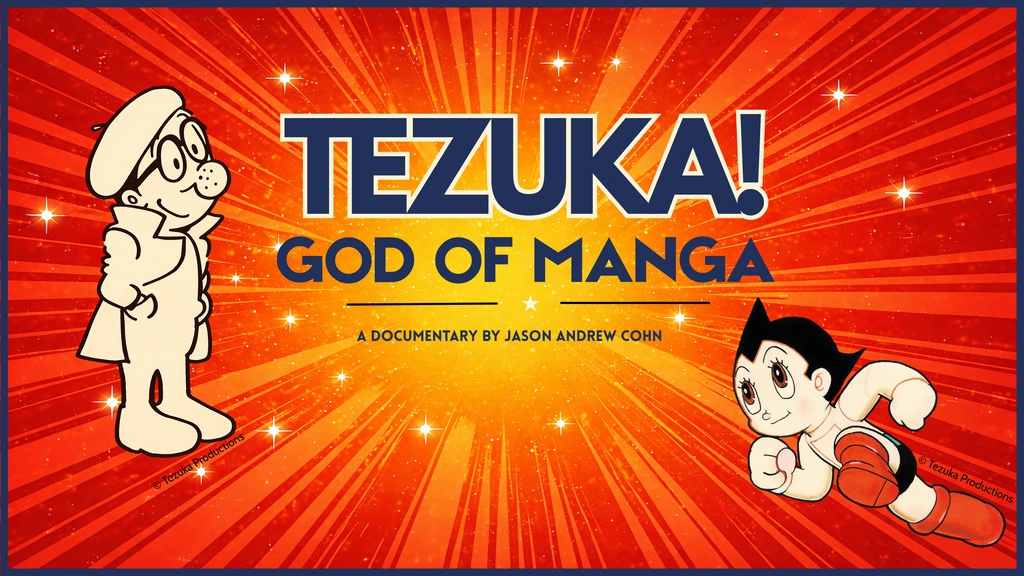
Peabody Award-winning director Jason Andrew Cohn and the Bread & Butter Films production team (Camille Servan-Schreiber, Jinko Gotoh, Glen S. Fukushima, and Roland Kelts) aim to spotlight Tezuka’s life and legacy with their feature-length documentary film, ‘TEZUKA! God of Manga,’ set for release in 2028, the year of Tezuka’s centennial celebration. The filming has already begun in Tokyo, the US and Europe, and the production is now launching its crowdfunding phase.
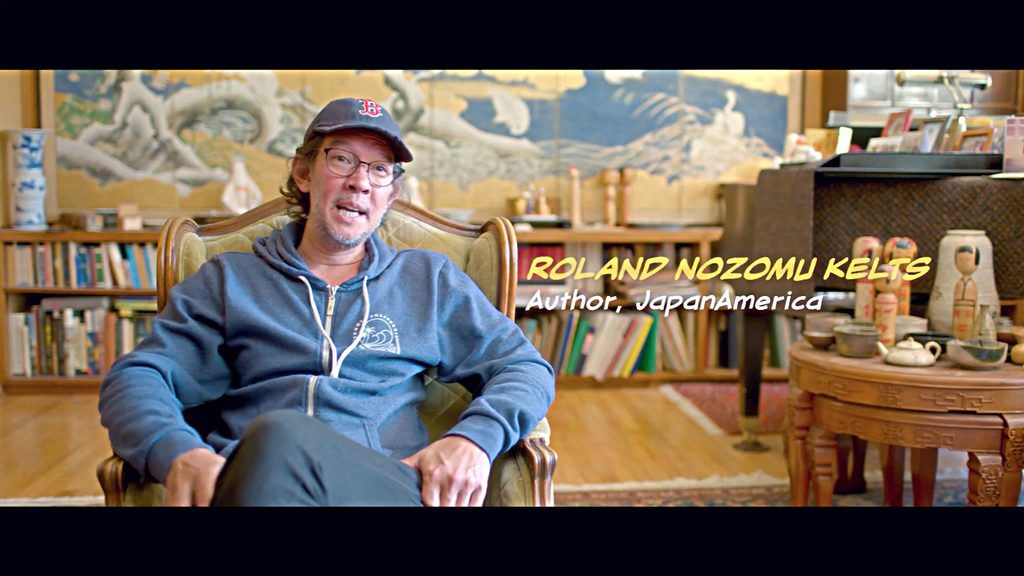
In an exclusive interview with The Big Picture Film Club, Kelts, who authored JAPANAMERICA, a book that explains the explosive popularity of anime and manga in Western culture and society, discusses Tezuka’s impact on global culture and the need to acknowledge how his art and legacy can help us cope with the challenges we face today.
Gabriel Leão (GL): How relevant is Tezuka for manga history?
Roland Kelts (RK): I’ve heard Tezuka compared to The Beatles here in Japan, but I’d take it a step further and compare him to Bach. Tezuka set out to revolutionise the comics medium. He achieved that and more.
He not only single-handedly invented the long-form, episodic storytelling template of modern manga and anime, but he also invented several genres using that template—shonen, mecha and shojo manga can all be traced back to Tezuka. He also excelled at sci-fi, romance, histories, comedies, epic mythologies and slice-of-life mini-dramas. He could write autobiographically or in modes of pure fantasy.
He set out to prove that manga could tell any story, high or low, Eastern or Western, and by every measure he succeeded. What’s more, he was outrageously prolific, producing over 150,000 pages and more than 700 titles, all in a lifespan of only 60 years. Some artists are great craftspeople; others lean toward entertainment. But very few possess real genius, and even fewer are true innovators who revolutionize their medium.
GL: What is Tezuka’s work’s impact on Western world culture?
RK: When I started doing research for JAPANAMERICA, I spent a full day at Tezuka Productions with Yoshihiro Shimizu, who knew Tezuka personally. Shimizu gave me a personal tour of Tezuka’s art, personality and creations. We had dinner that night, and in the taxi to my apartment I kept jotting notes about Tezuka’s seminal role in Japanese culture. I was nearly gasping with excitement, like I’d found the genesis of an entire industry.
But when I got back to New York, I was shocked to find only scant awareness of his genius, and mostly among older fans who reminisced about ‘Astro Boy’ or ‘Kimba the White Lion,’ or occasionally ‘Black Jack.’ I discovered then that it was mostly Western artists and older audiences who knew what made him great. That made me determined to open JAPANAMERICA with an entertaining education in Tezuka lore, and determined now to produce the definitive film about him.
GL: Why is Tezuka’s name not more widely known than that of his successors?
RK: One theory I find particularly convincing was recently shared with me by one of our executive producers, Glen S. Fukushima. Tezuka’s death in 1989 was preceded by only a few years of the global flowering of the internet. Had he lived until the mid-90s, say, he would likely have been very active online. He embraced new technologies and liked being a public figure. But the immediate years after his death saw the customary silencing and slowing of activity that follows shock. Nobody expected him to die when he did.
I should add that Tezuka was hardly the finest or most sophisticated draftsman. He drew quickly, and he drew a lot, and he had a signature style that many others still emulate. But the kind of hyper-detailed work being produced by then up-and-coming masters like Katsuhiro Otomo (Akira) and Miyazaki was visually much more elaborate than anything Tezuka attempted. His real legacy lies in his relentless genius as a storyteller.
GL: What are the hardships involved in producing this documentary?
RK: To me, the hardest challenge involves restraint. Tezuka produced so much art over such a vast territory of subject matter and emotional terrain that it’s hard to contain him in one feature-length documentary. But his life story gives us the backbone of a classic Joseph Campbell-shaped hero myth. As a youth, he was nearly bombed to death in the war and witnessed horrific scenes of destruction, then rose to inspire himself and others through art and entertainment, then slipped into the netherworlds of darkness and failure, only to rise again like a phoenix through grit and self-reckoning as a mature artist whose creations have long outlived him.
GL: Why does this documentary matter?
RK: Aside from the celebration of Tezuka’s centennial in 2028, this documentary appears at a time of increasing global anxiety, spreading warfare and environmental catastrophe, not to mention the alarming regression into nativism and unilateral nationalism. From the start, Tezuka celebrated trans-cultural cross-pollination, embracing the early works of Disney as a child and basing one of his first-ever manga on Robert Louis Stevenson’s “Treasure Island.” He used manga to tell the story of the Buddha and the phoenix. He used manga to revisit the psychologies of the real-life German Adolf Hitler and Dostoevsky’s fictional Russian Raskolnikov. In short, his imagination was borderless—the essence of freedom—versus the pinched, provincial and parochial world we’re seeing in the 21st century.
Maybe more importantly, as we tip over the edge into the realms of AI, Tezuka was resolutely unafraid of new technologies. Indeed, as the author and historian Ada Palmer suggests in our film, Tezuka may have embraced AI as a possible saviour for humanity at a time when humans seem hell-bent on exacerbating inequality, and privileging violence and hatred as the world around us collapses.