
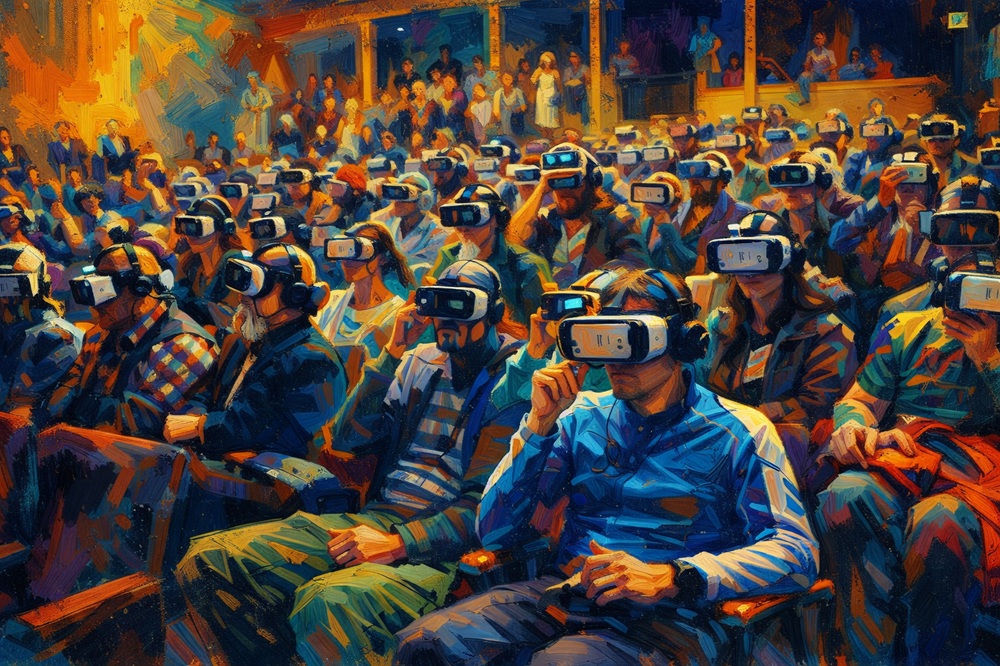
Much has been said about how Video-On-Demand services like Netflix have changed the movie industry over the last few years, with Netflix and Amazon Prime being key players leading the charge. Cheaper technology has also allowed for a lower barrier to entry for filmmakers – even Steven Soderbergh’s new film, Unsane, was shot on an iPhone! Although the technology is still maturing, tech companies are investing heavily in Virtual Reality (VR). Will this be the next area the film industry can capitalise on?
VR in Games
VR currently has a 90% public awareness, according to YouGov. Further indicators of early mass adoption of VR can be seen in the gaming industry. VR Systems saw a 23.5% year-on-year rise in 2017, cracking the £100m barrier for the first time. Currently, 6% of the British population owns virtual reality headwear; At the equivalent time, after widespread release, wearables had 4% penetration, and tablets had 3%. The gaming industry has led the charge in this area with PlayStation VR, Oculus Rift & HTC Vive making up the vast majority of sales and with more game developers working on games specifically for VR, growth in VR games looks to be strong moving forward.
The major film studios have been a lot slower to adopt VR as a way to exhibit films. However, VR is used as a medium to create immersive experiences based on a film title, rather than actually making a movie to be watched via VR. In this instance, particularly with horror films like The Conjuring 2, a VR-based experience acts as a great promotional tool to complement a wider marketing rollout.
Should We Expect a Breakout of VR Films?
A current problem is that there simply aren’t that many platforms designed for VR films – particularly feature-length ones. Currently, Video-on-Demand powerhouses Netflix & Amazon Prime do not support VR, tech giants Facebook & YouTube have enabled 360 VR videos to be uploaded onto their platforms. This makes the two social media platforms a key testing ground for the wider adoption of films in VR.
Many more experimental independent filmmakers have begun to explore VR as a method of producing short films. The Invisible Man (shown below) is an example of how the medium can be utilised to produce a compelling film.
Moving Forward
Since its inception over 100 years ago, how we experience film has remained largely unchanged; however, what we have seen through television/VoD services, as well as 3D cinema, is complementary user experiences running parallel to traditional cinema. At least in the immediate future, what seems most probable is that VR will add another dimension to the ways we can experience the “moving picture”. With new technology, new ways to creatively exhibit films will surely soon follow.