
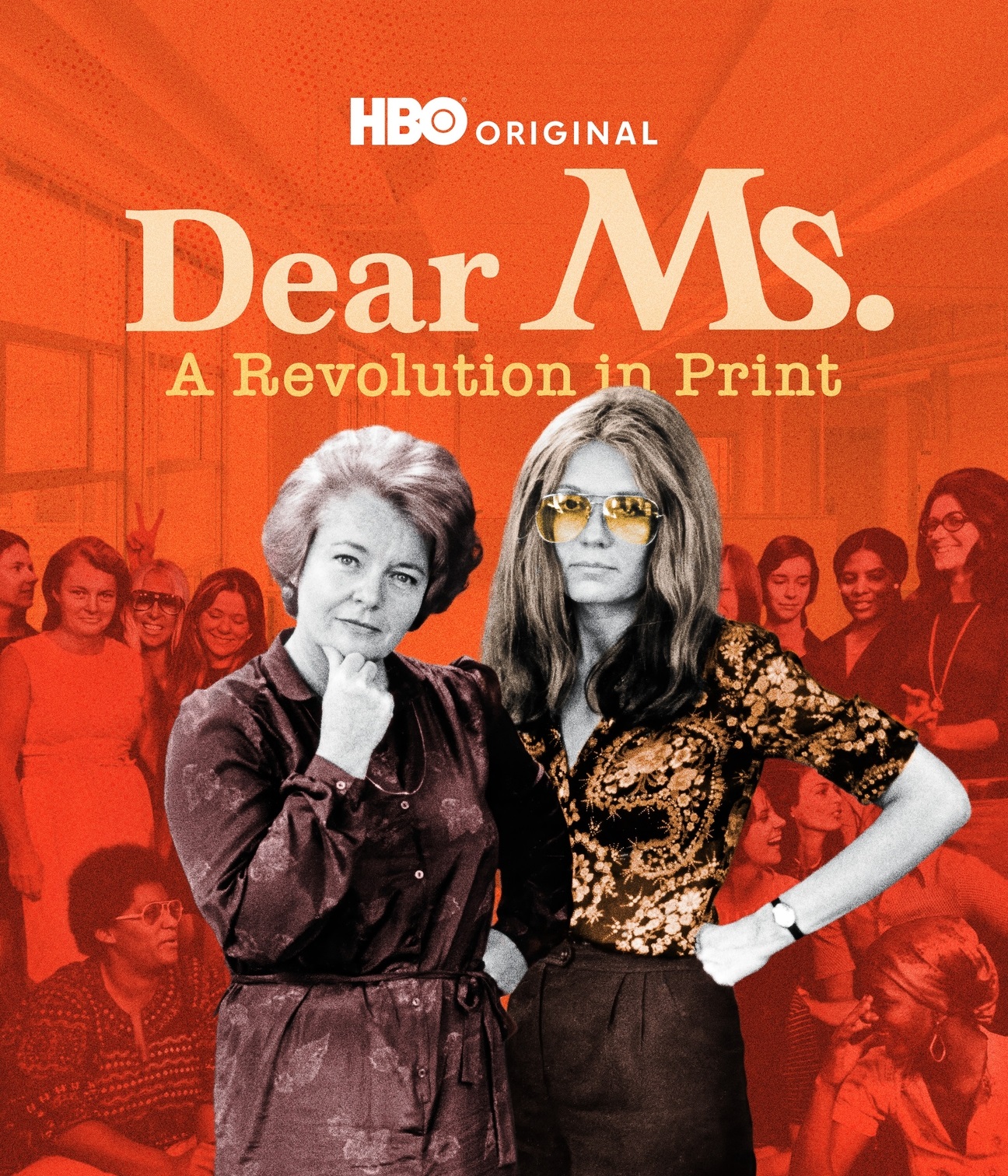
HBO’s ‘Dear Ms.: A Revolution in Print’ (2025) presents a vision of the pioneering and complex Ms. Magazine. The magazine was founded in 1972, technically in 1971, during the Civil Rights Movement. It played and continues to play a key role in second-wave feminism and female emancipation in American society. As happens with much American activism and media, it has influenced movements around the globe.
The HBO doc is helmed by three female directors: Alice Gu, Cecilia Aldarondo, and Salima Koroma, composing a kaleidoscope of parts that approach different moments of the magazine through its most iconic covers, each with a distinct feeling yet in dialogue with one another.
Ms. Magazine was co-founded in 1972 by journalist and activist Gloria Steinem, along with editors Letty Cottin Pogrebin, Patricia Carbine, and Suzanne Braun Levine. The magazine challenged the usual woman-oriented publications that focused on housekeeping, suburban fashion, or recipes. These typical magazines were supported by brands and felt more like advertisements than journalism, let alone spaces for opinionated writing.
In reality, the debut of Ms. Magazine happened months earlier, on 20 December 1971. What is seen as the first edition was a 40-page insert in New York magazine, which had, in its ranks, founding editor Gloria Steinem as a staff writer. Considering that it could be their only shot to bring more serious conversations, the issue featured pieces on Black Family and Feminism, the need to review the roles of sex and gender in the English Language, and the strong story We Have Had Abortions which brought a list of 53 signatures by well-known American women, including Anaïs Nin, Susan Sontag, and Steinem herself. In eight days, the 300,000 available copies sold out. What followed was a successful story of a magazine founded and run by women, negating the voices rooting for its failure.
Having non-reader-friendly pages meant that announcers wouldn’t throw money at the magazine; still, it approached subjects that were avoided, and by its reception, the publication showed that society needed to face itself in the mirror.
“Domestic violence” and “sexual harassment” might come up every now and then in the media and at the workplace when discussing the trials that women go through in their daily lives; still, it is due to Ms. Magazine’s trailblazing that such terms for these dreadful situations are part of the lexicon. Although there is still much to be done regarding women’s and other minorities’ rights, the documentary features film and TV clips from that era and interviews with women recounting their experiences, showing what may feel like a different world but is still very present today. Thus, conforming to the defining work by such publications.
One of the highlights of the documentary is that, even though it uses archival footage and shows interviews from that time and period, it has never-seen-before footage of the period and interviews with the Ms. Magazine staff, allies, and collaborators, which makes it more valuable, considering that many of those voices are now in their twilight, thus giving more credibility to this work.
A precise look at the complexity of the feminist movement
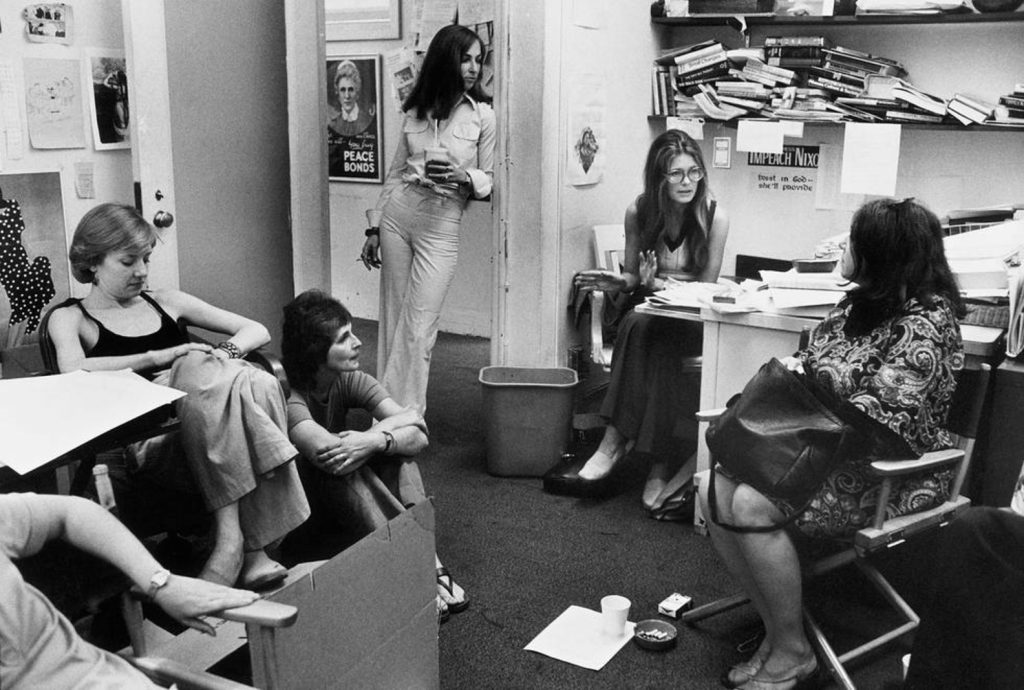
By not turning it in a pinkish nostalgia dream, ‘Dear Ms.’ goes into the deep conversations between feminism and intersectionalities showcasing how with all the good intentions, White feminism can have it blind spots for Black women and other non-white women hailing from impoverished backgrounds that have to deal with their condition as women plus racial background and economic realities that push them downward in the stairs as they struggle for a better place in society and more respect from their peers.
The delusion of Black women can be seen in how the magazine Essence, which focused on Black women, didn’t flourish as its bigger cousin. Pain and frustration can be heard in these Black voices, but so too can the ways in which such hard and disappointing experiences can reinvigorate and be turned to other ways for female Blackness.
The documentary’s third act explores the difficult topic of feminism and sex work, showing that the movement is not a heterogeneous body. Some radical feminists oppose sex work, sometimes mirroring conservative or religious positions. Still, some women view sex work as part of their feminist expression, and it provides income for many disenfranchised women.
Former porn actress, sexologist and activist Annie Sprinkle shines in this section. She shares her decades-long perspective and offers a profile of sex worker life in America. In the end, Sprinkle speaks about her Ms. Magazine piece on cookies. While she does not mention sex work there, the piece serves as a metalinguistic microcosm of how sex work fits into society. It is controversial, but it won’t go away, much like cookies.
The trio of directors is competent and made good use of the subjects, themes, and interviewees to avoid having a bloated doc; on the other hand, giving Ms. Magazine a proper look through, and the helmer’s skills open up opportunities for other documentaries: one focused on Black Women Magazine Essence, and the other featuring Sprinkle as a character study. Sprinkle is a character from the 70s and 80s gritty New York and should have a biopic by now.
‘Dear Ms.: A Revolution in Print’ should be available in physical form, and Journalism, Sociology, History, and Anthropology colleges, among other Humanities areas, would do their students and staff a favour by showing it to them. Ms. Magazine is still in print, and it has a younger sister, the Women’s Media Center (WMC), which counts Gloria Steinem among its founders. I’m glad that at the start of my foreign writing career, I was able to publish with WMC, where I learned not only about journalism but also how to approach and cover minorities and distressing realities.