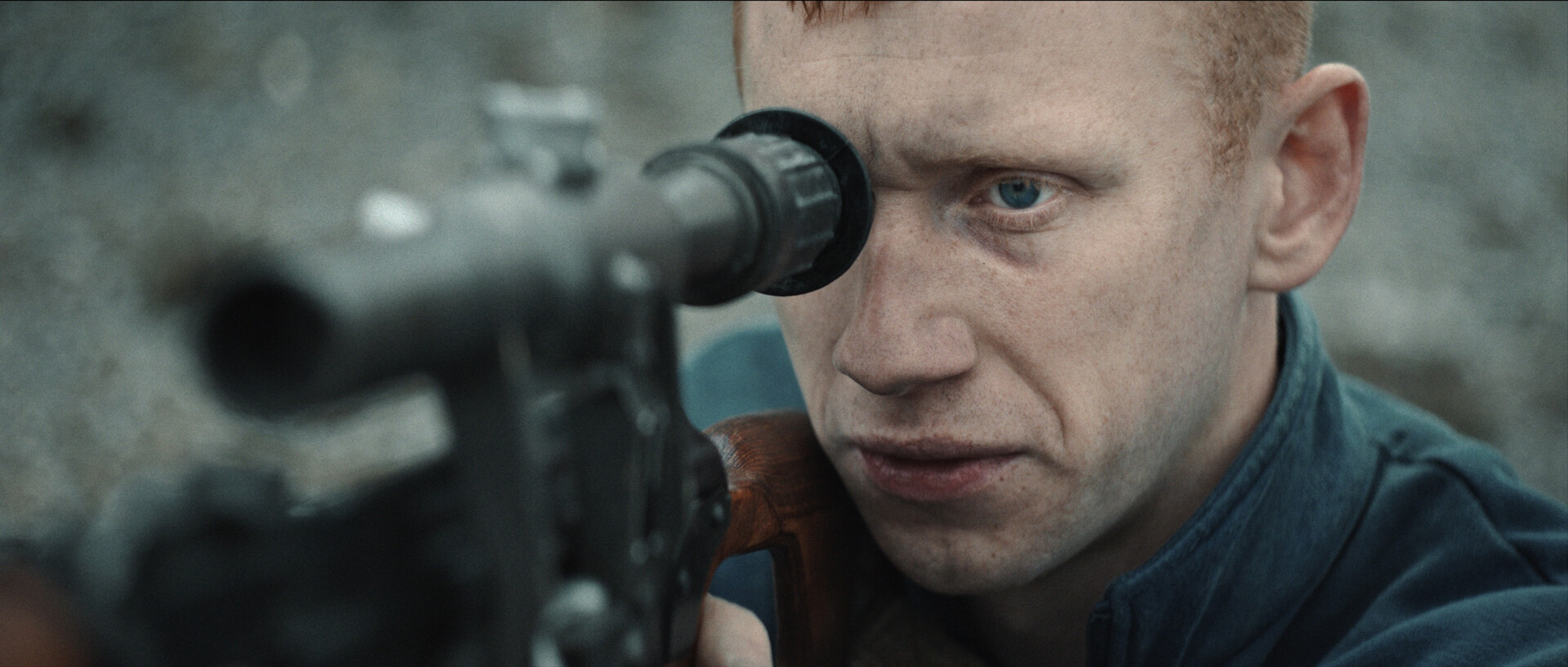
Few recent short films have landed with the force of Rock, Paper, Scissors. Tense, cerebral, and resolutely unglamorous, Franz Böhm’s BAFTA-winning war drama offers a frontline perspective that feels both urgently specific and universally human. Anchored in the ongoing Russia–Ukraine war but refusing spectacle, the film centres instead on endurance — the quiet, devastating choices made by civilians simply trying to keep others alive.
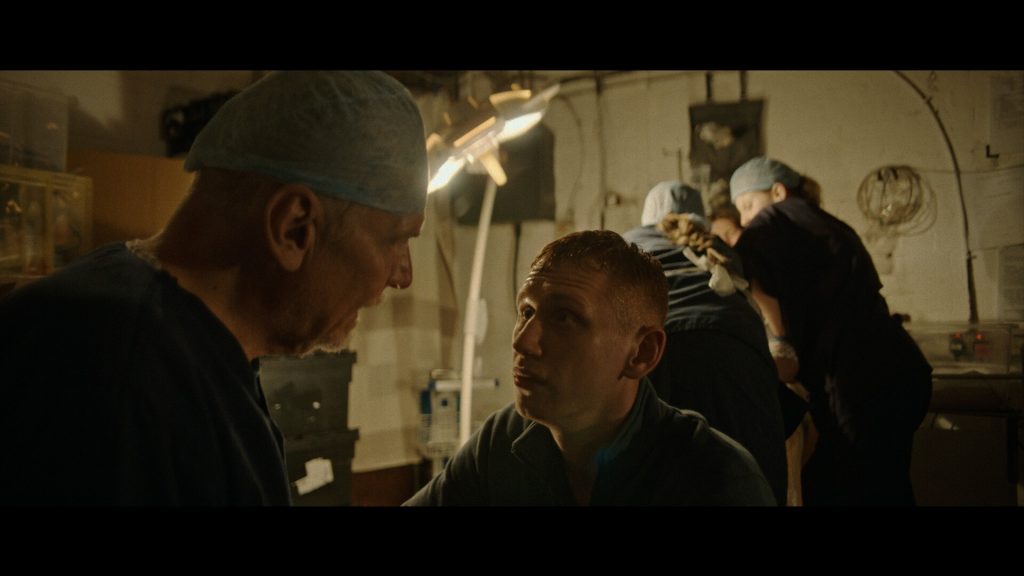
Based on true events, Rock, Paper, Scissors follows Ivan, a 17-year-old Ukrainian boy, and his father as they run a makeshift hospital from inside a bunker while fighting rages above them. When an approaching platoon threatens their fragile sanctuary, the pair are forced into a decision that no one — let alone a child — should ever have to make.
The film recently won Best British Short Film at the 2025 BAFTA Awards and has since been shortlisted for the Academy Awards® Live Action Short Film, marking it as one of the most significant short films of the year. We spoke with writer-director Franz Böhm about the origins of the story, his approach to scale and restraint, and what these milestones mean to him.
Presh Williams: Rock, Paper, Scissors is based on actual events. How did you come across the story?
Franz Bohm: I’ve met Ivan, who became the main source of inspiration for this project, in England when he was a teenager. As we spent more time together, Ivan began to share what he had experienced back home. It was raw, personal, and deeply human. What started as a friendship soon became a creative collaboration. Together, we wrote the screenplay for what would become Rock, Paper, Scissors.
Working with Ivan remains one of the most meaningful experiences of my life. His clarity, courage, and sense of purpose shaped every part of this project. Even after he returned to Ukraine, his spirit stayed with us. It guided the team, the performances, and the tone. He gave the story its soul.
PW: RPS could be equally as powerful as a 10-minute film or as a 30-minute film. How did you decide on what aspects of Ivan’s story you would include in the short film?
FB: It’s something we discussed a lot during the writing and editing process. From the very beginning, we knew that Rock, Paper, Scissors had to feel like a complete experience, not just a snapshot. The film had to carry the emotional weight of Ivan’s story. The claustrophobia of the bunker, the fragility of youth in wartime, and the impossible choices he faces. All within a limited timeframe.
We experimented with longer and shorter versions, but ultimately landed on 20 minutes because it allowed us to stay close to Ivan’s emotional arc without diluting the intensity. Too short, and we risked losing the buildup of dread and responsibility that weighs on him. Too long, and we might have drifted away from the urgency and focus that the story demands.
At its core, this film is about a boy who has to grow up in a single day. Every scene we kept had to serve that arc, not just narratively, but emotionally. It wasn’t about showing everything that happened, but showing enough for the audience to feel what it meant.
PW: Have people who knew Ivan seen the film? How has support been from the Ukrainian community?
FB: Ivan himself saw multiple versions of our cut, and it was wonderful to collaborate with him. It became a shared creative journey, and I learned so much from his honesty and clarity.
Since his passing, I’ve been incredibly moved by the response from the Ukrainian community. People who knew him, or who recognise their own experiences in the film, have reached out. I’m grateful for the many messages of support. What’s meant a great deal to me are the community-led screenings that have taken place in Ukraine. People have organised gatherings in basements, schools, and cultural centres, often in difficult conditions, to share the film with others. That kind of grassroots response is incredibly powerful.
Their support has been so generous, and I carry that with me every time we show the film.
PW: From your work in Dear Future Children (to now), a key aspect of your work seems to be profiling how people in extreme adversity overcome their circumstances. Would you say that is a fair characterisation of your work?
FB: Yes, I think that’s a fair characterisation but I’d maybe frame it slightly differently.
What drives me as a filmmaker is a deep fascination with the human capacity for dignity and resilience, especially when people are pushed to the edge. From Dear Future Children to Rock, Paper, Scissors, I’ve been drawn to stories where individuals are forced to make impossible choices under extreme pressure.
I don’t approach these stories as case studies of suffering. I approach them as portraits of courage, resistance, and moral complexity. What interests me is not just the hardship itself, but how people retain their sense of self, how they connect to others, and how they keep going even when the world seems to fall apart around them.
PW: You won the Best Short Film at the 2025 BAFTAs and are now shortlisted for the Oscars. What do these incredible milestones mean for you?
FB: It’s been incredibly humbling. Winning the BAFTA was a moment I’ll never forget — not just because of the recognition itself, but because of what it represents: that this story, born from a very real and painful place, resonated with people on a wider scale. Being shortlisted for the Oscars now is another overwhelming moment. It means that the hard work, the risks we took, and the trust of our Ukrainian cast and collaborators have led to something that really travels beyond borders.
But more than personal pride, these milestones are a reminder that stories like Ivan’s matter. That cinema still has the power to give voice to people in impossible situations. It encourages me, and hopefully others, to keep pushing for stories that are urgent, impactful, and grounded in human experience.
Rock, Paper, Scissors is currently shortlisted for the Academy Award® for Live Action Short Film, with the 98th Academy Awards taking place on 15 March 2026 — a moment that could see this urgent, human story recognised on cinema’s biggest stage.