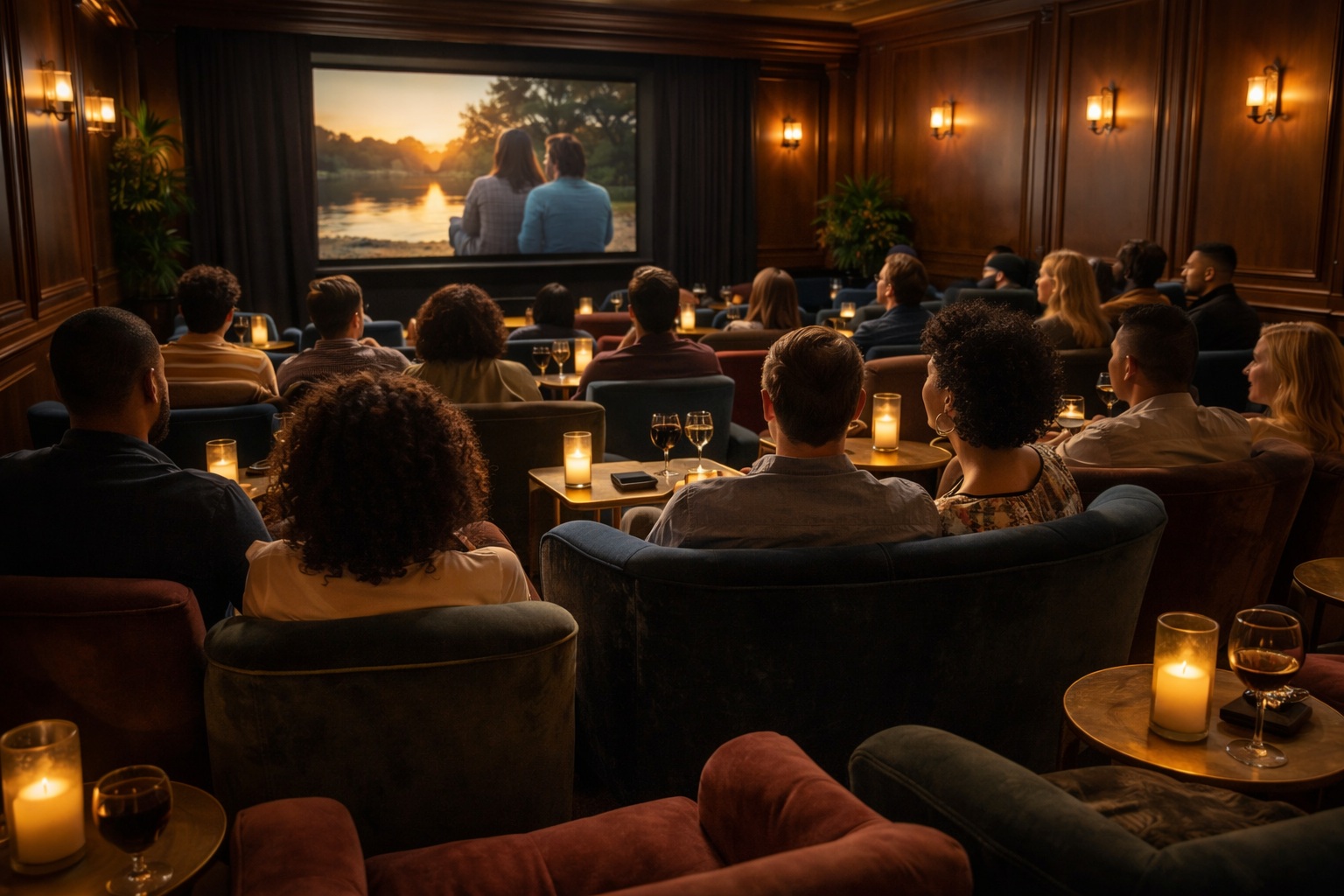
As the new year dawns, it will be close to six years since the pandemic shuttered movie theaters. Now, a new trend is taking hold: intimate boutique screening rooms, often seating 20 to 50 people, are opening their doors. A hopeful sign that audiences are returning to the movies in new, innovative ways.
They’re not just smaller. They are offering curated programming alongside elevated dining, Q&As with filmmakers, and other experiences that can’t be found at the multiplex or streaming in your living room. In many cases, they are being rented out for private showings.
This isn’t nostalgia; it’s an opportunity. For movies, these smaller, more intimate venues are a physical manifestation of a broader shift in the industry. Over the next year, we are going to see filmmakers, independent distributors and even the big studios focusing more on smaller, human-driven stories that are centered on making emotional connections with audiences.
Cinema as Community
The rise of the small theater in many ways returns film to its original purpose, as a connective experience that we share with people, rather than as content we consume alone. By adding new elements to the theater-going experience, we are seeing the first true reimagining of how to engage with film since the rise of streaming.
After a period of trying to compete with home viewing by going bigger and noisier, the industry may finally realize that going more personal and curated may be the best way forward.
This shift in how we watch influences what we want to watch.
The Return of the ‘90s Era Indy Film
Audiences are showing signs of gravitating toward character-driven dramedies, romantic comedies, and films that appeal across generations. They want movies they can watch with their parents and their kids.
Part of the desire for that communal viewing experience is a hunger for stories that are centered on human connection and offer appeal across different audience groups.
The appetite for these films is colliding with a transformed distribution landscape.
Fewer Releases, More Pathways
Studio consolidation has reduced the number of theatrical releases, but this contraction has opened alternative routes to audiences.
Smaller bespoke distribution companies bypass traditional gatekeepers. Upstarts like GATHR, Kinema and Assembly Releasing – whose innovative use of generative AI in its documentary “Eno” created a completely new way of experiencing and interacting with a film. Second-run movies and the explosion of documentary shows that the marketplace isn’t shrinking, it’s fragmenting into specialized channels. It creates the perfect environment for telling the kind of personal stories we are seeing filmmakers gravitate towards.
Seeing More of Ourselves Onscreen
Movies are always about escapism on some level. A key element to that escapism in immersing oneself in stories that provide levity, warmth, and recognizable human lives.
In an age of AI and algorithms, there is a huge – and potentially lucrative – opening for producers to zero in on these new trends.
The Bottom Line: Small Rooms, Big Recalibration
The boutique theater boom isn’t a niche trend, it’s a barometer. These venues and the films they champion represent a shift in audience expectation that the industry should be paying attention to. And please make sure the popcorn is fresh!